
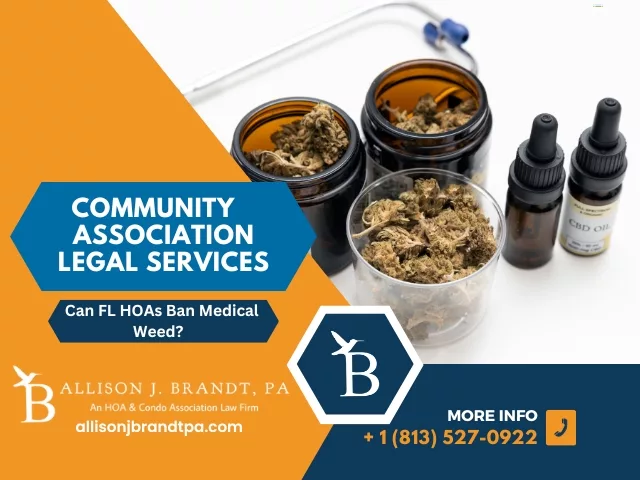
Navigating the Legal Landscape of Medical Marijuana

Are you part of a Florida community association wrestling with the complexities of medical marijuana laws? Since 2016, Florida’s legislation has acknowledged the legality of medical marijuana for patients with specific conditions, but the ripple effect on community living is nuanced and multifaceted.
The Impact on Community Associations
Community associations like yours play a pivotal role in establishing a balance between compliance with state laws and ensuring the comfort of all residents. Discover how to navigate these waters with care and consideration, protecting the rights of all residents.
Legal Considerations for Renters
As Florida’s medical marijuana laws evolve, so do the challenges faced by community associations regarding renters. It’s crucial for associations to delineate clear guidelines that respect the rights of renters who are medical marijuana patients while ensuring these guidelines align with rental agreements and community standards.
The following is a DRAMATIZATION AND IS NOT AN ACTUAL EVENT: Consider Sarah, a renter with a medical condition treated with marijuana. Her lease prohibits smoking but does not explicitly address medical marijuana use. When neighbors complain about the smell, the association must navigate between Sarah’s rights and the lease terms. An HOA attorney, like Allison J. Brandt, PA can help associations update rental agreements and create fair policies that consider evolving state laws and protect all parties involved.
Community Engagement and Policy Development
In the realm of community associations, consensus is key. Engaging with residents, understanding their concerns, and educating them about the legal aspects of medical marijuana can lead to more informed and widely accepted policies. The goal is to forge a community consensus that recognizes the rights of medical marijuana users while upholding the values and preferences of the community as a whole.
The following is a DRAMATIZATION AND IS NOT AN ACTUAL EVENT: At the annual community meeting, board members present a draft policy on medical marijuana use. They host a Q&A session, allowing residents like Tom, a retired veteran and a medical marijuana user, to voice his needs. Simultaneously, Eva, a mother of three, shares her concerns about marijuana use around her children. The dialogue opens pathways to a policy that accommodates both Tom’s medical needs and Eva’s family concerns, with legal backing from experts.
Recent Legal Developments
The juxtaposition of state and federal law creates a grey area for community associations. Federally, marijuana remains an illegal substance. This discrepancy can be a challenge when addressing resident complaints or when community associations themselves rent out properties. Recent movements at the national level suggest a growing acceptance of marijuana, but until federal laws change, associations must remain vigilant.
In the context of community associations, there have been legal developments that suggest boards should be careful and considerate. For instance, discrimination against medical marijuana users, especially when it involves individuals with disabilities, could lead to legal consequences. It is, therefore, crucial for community associations to remain updated with both state and federal guidelines and adopt a proactive, rather than reactive, approach.
Adapting Community Spaces for Legal Marijuana Use
With medical marijuana’s legal status in Florida, community associations face the challenge of adapting shared spaces while respecting the law and community standards. It’s about finding a middle ground where the rights of individuals with medical needs are observed without compromising the well-being of the community.
The following is a DRAMATIZATION AND IS NOT AN ACTUAL EVENT: Picture a community garden within a condominium complex where residents like Maria, who uses medical marijuana to manage her chronic pain, can enjoy her medication in peace. The association decides to designate certain hours and areas for medical marijuana use, ensuring that other residents, like Paul, who coaches youth soccer in the same space, have separate times for their activities. This strategy exemplifies a thoughtful approach to shared space management, one that legal experts can help craft and implement.
Associations must navigate these decisions with a comprehensive understanding of legal boundaries and a compassionate approach to resident needs. By doing so, they can create an environment that honors the rights of all residents.
Crafting Inclusive Spaces in Your Community
In the evolving landscape of medical marijuana use, your community association can become a model of inclusive and respectful space management. Let our HOA attorney guide your HOA Board in developing policies that uphold both the law and the essence of community living.
Conclusion
As you stand at the crossroads of legal obligations and community satisfaction, it’s clear that expert guidance is not just beneficial, it’s essential. Navigate this challenging landscape with the confidence that comes from having a seasoned legal advisor by your side.
FAQs
1. How can associations accommodate medical marijuana use in shared spaces?
By designating specific areas and times for use, ensuring that all residents’ rights and needs are considered.
2. What legal considerations must be taken into account?
Associations must consider state medical marijuana laws, federal laws, and their own bylaws when adapting shared spaces.
3. Can an association prohibit medical marijuana use in all common areas?
While associations can set restrictions, they must also consider the reasonable accommodation of residents with medical needs.
4. How can associations ensure policies are clear and enforceable?
Clear communication, signage, and the support of legal counsel can help in effectively implementing these policies.
5. Can community associations ban the use of medical marijuana?
Associations can set rules for common areas but must consider the rights of residents with prescriptions.
6. How can associations accommodate medical marijuana users?
They can create policies that allow use in private spaces while restricting public consumption.
7. What should associations do about the federal illegality of marijuana?
Community associations should closely monitor both state and federal laws regarding marijuana to stay compliant. Even though medical marijuana may be legal in Florida, it remains illegal under federal law. This creates a complex situation for community associations, which may be subject to federal as well as state regulations, particularly if they receive federal funding or have federal contracts.
Ready to Embrace Change?
Contact Allison J. Brandt, PA for expert advice on adapting your community spaces in a way that respects legal guidelines and fosters a supportive atmosphere for all residents. It’s time to lead the way in community innovation and inclusion.